Sorting out the repair your crawl space needs
We start by looking at the moisture conditions and the wood framing. We need to establish the amount of affected framing, the sealing work required, the crawl space volume used to size the dehumidifier, and the route for its drain line. These details allow us to build an accurate scope and estimate before any work begins.
Treating the framing before covering it
Where wood framing is affected by mold, we apply an EPA-registered borate or encapsulant spray to the affected surfaces. The treatment needs time to dry. We verify that moisture levels are fully corrected before moving ahead with encapsulation. Getting the spray onto the wood is only one part of the work, and we never skip the drying and verification stages before enclosing the space.
Encapsulation and sealing
For rim joist and wall sealing, our crew uses a spray foam insulation rig. We identify this sealing work in the scope alongside encapsulation. It serves a completely different function from the spray treatment on affected wood, creating a barrier against outside air and moisture.
Keeping humidity controlled and water moving out
We install a crawl space-rated dehumidifier sized to the volume of the space. The equipment includes a condensate pump and drain line, and we route the collected water to a sump or out to daylight. Once installed, we commission the unit at a 50–55% relative humidity setpoint and integrate its operation with the encapsulation system. Periodic heavy rain in Muskogee tests drainage and grading, so if you notice conditions beneath the house change after a storm, tell us when you call.
What the Work Involves
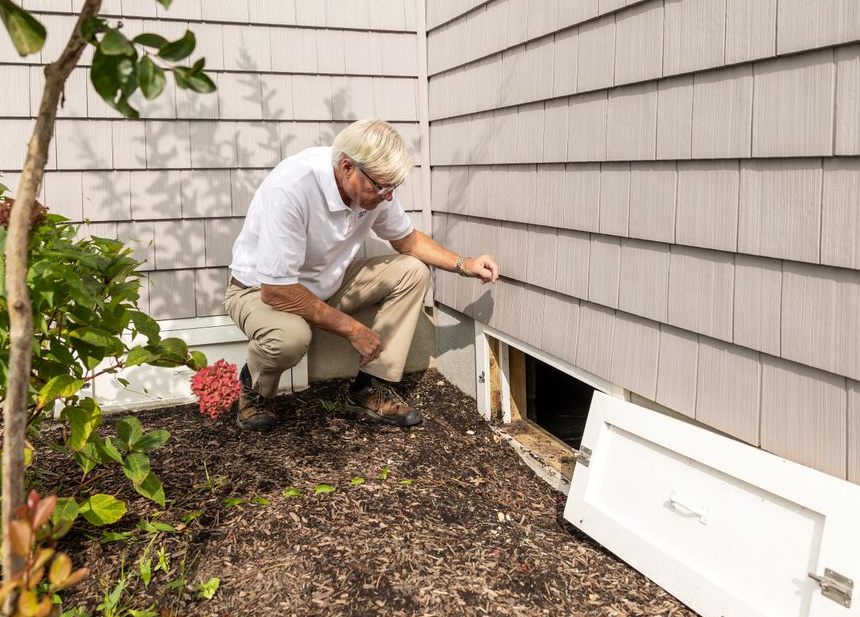
A few photos representative of the work.

From First Call to Finished Job
-
Tell Us What's Going On
A two-minute call is enough to tell us what we're working with and what to check first.
-
We Take a Look
We come out, measure what's actually happening, and walk you through what we find.
-
Know the Price First
You get the scope and the price in writing before any work starts. No surprises.
-
We Do the Work
We complete the repair, verify it solved the problem, and stand behind the work.
Depending on what we find, that can mean:
- Humidity control: install crawl space dehumidifier sized to volume, route condensate to sump or daylight, commission at 50–55% RH setpoint, integrate with encapsulation system
- Mold remediation and wood treatment: apply EPA-registered borate or encapsulant spray to affected wood framing surfaces, allow dry time, verify moisture levels are corrected before encapsulating
What It Typically Costs
Ranges to budget around - every situation is priced on its own specifics.
$300–$600
$2200–$8100
Common Questions
In Muskogee, settling comes down to the local ground conditions: Mixed regional soils with moderate moisture retention.
Warranted pier locations are re-leveled at no charge if movement exceeds the tolerance stated in the warranty. Movement outside the repaired footprint is evaluated case by case.
Slab-jacking (mudjacking) lifts a sunken concrete slab such as a garage floor, driveway, or patio by pumping a cement-based slurry underneath it. It is a fast, lower-cost fix for slabs that have settled but are otherwise sound.
Foam leveling injects an expanding polyurethane through dime-sized holes; it is lighter, cures in under an hour, and resists washing out, but costs more per square foot. Mudjacking uses a heavier cement slurry and costs less but can settle again over time.
Stair-step cracks that follow the mortar joints in brick or block often indicate differential settlement and should be evaluated, especially if they are wider than a quarter inch or still growing.
Hairline cracks in drywall are usually cosmetic. Diagonal cracks from window and door corners, horizontal cracks in a foundation wall, and stair-step cracks in brick or block are structural warning signs that should be evaluated.
Settlement is almost always about the soil under the footing. Expansive clay that swells and shrinks with moisture, poor drainage that washes out support, plumbing leaks, and loosely compacted fill on newer builds are the usual causes.
A Few More Questions
There is no fixed depth. Piers are advanced until they reach soil or rock that can carry the load, which can be a few feet or more than thirty depending on the site. A soil bearing test sets the target before installation.
Lifting a settled foundation back toward level closes most cosmetic cracks on its own. Any remaining hairline cracks are sealed once the structure is stable so they don't reopen.
A pier installation on an average home runs one to three days depending on access and the number of piers. Crack injection or slab leveling usually finishes in a single day.
Most repairs are done from the perimeter or crawl space and don't require leaving home. For a large interior lift with significant floor disruption, staying elsewhere for a night can be more comfortable.
A manometer maps the floor's elevation across every room to show exactly where and how much the structure has settled. Without it there is no way to spec the correct pier depth or calculate how much lift to apply.
Serving Muskogee and Nearby
We work across Muskogee, OK. Call (918) 351-6948 to confirm coverage for your address.
What You Can Hold Us To
- Free Estimates
- You pay for work, never for the quote.
- No surprise charges
- The bill matches the quote, extras get your OK first.
- We answer the phone ourselves
- A real person picks up, not a voicemail maze.
- Photos of the finished work
- The finished work is documented, not just described.
No-Pressure Inspections
Free Inspections, fast scheduling, (918) 351-6948.